How Often To Replace a Water Heater Anode Rod and Why It Matters
Your water heater provides you with hot water for chores and warm showers while operating silently in the background. To be in its best condition, it requires routine maintenance, just like any other device. The anode rod, a little but powerful device that guards against rust and corrosion in your water heater, is one element that is frequently overlooked. Many homeowners don’t know how often to replace a water heater anode rod, and as a result, their tanks may fail long before their time. Being aware of when and how to maintain it will help you avoid future expensive repairs.
How Often To Replace a Water Heater Anode Rod
Experts generally advise replacing your anode rod every three to five years and inspecting it every two to three years. However, how often to replace a water heater anode rod can vary depending on a plethora of factors, including your water quality, heater usage, and maintenance habits.
Factors That Affect the Life of an Anode Rod
Water Quality and Hardness
Your anode rod’s lifespan might be considerably shortened by hard water. The rod corrodes more quickly in the tank due to the deposit of minerals like calcium as well as magnesium. Think about inspecting the rod once a year if your water is harsh. Its lifespan can also be increased by installing a water softener.
Frequency of Water Heater Use
Your anode rod will decay more quickly if your home utilizes a lot of hot water on a daily basis. Compared to families with low water heater usage, individuals with high usage demands should check their rod more frequently.
Tank Maintenance and Flushing
Sediment that often forms at the bottom of the tank can be removed with regular flushing of your water heater. Ignoring this step might lead to accumulation, which decreases effectiveness and accelerates corrosion. The longevity of your anode rod can be significantly impacted by regular maintenance.
How Do I Know When My Anode Rod Needs Replacing?
You can take action before major issues arise by being aware of the warning indications of a worn-out anode rod.
Visible Signs of Wear or Corrosion
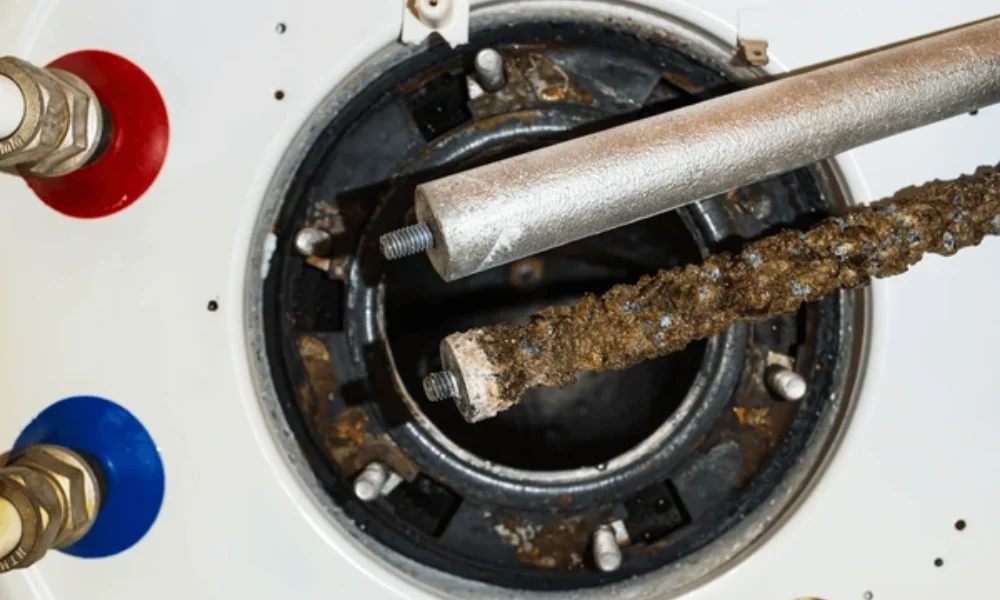
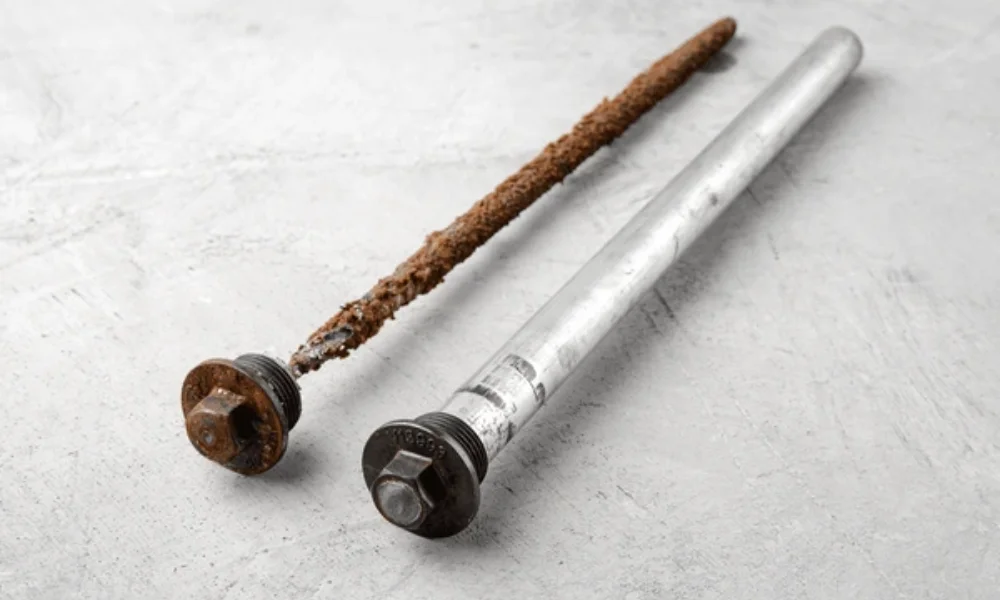
Your anode rod has to be replaced if you examine it and find that it is severely pitted, corroded, or covered in calcium deposits. A rod has served its purpose and should be replaced right away if it has thinned to less than half an inch in diameter.
Foul-Smelling or Discolored Hot Water
Your anode rod is really degrading if your hot water has a rotten egg odor. The substance of the rod and the bacteria in the water react chemically to produce this stench. Likewise, murky or rusty water is another indication that your rod isn’t adequately shielding the tank.
Reduced Water Heater Efficiency
The anode rod may have reached the end of its useful life if your water isn’t as hot as it once was or if your energy costs are increasing. The heater has to work harder to provide hot water when the rod fails because rust starts inside the tank.
How To Replace an Anode Rod in a Water Heater
While it might sound technical, learning how to replace anode rod in water heater is relatively simple for those comfortable with basic home maintenance.
1. Turn Off the Water Supply and Power Source
Turn off the power source before you begin. Then, set the gas control knob to the “Pilot” position for gas models. Next, turn off the tank’s cold water supply valve.
2. Locate and Removing the Old Anode Rod
To start, empty the tank of a few gallons of water to avoid spills. Next, identify the anode rod, which is often found above the heater. If you’re unsure where is the anode rod on a water heater, refer to your user manual—it’s usually beneath a hex head bolt. To loosen and remove it, use a socket wrench.
3. Install the New Anode Rod
Avoid overtightening the new rod after inserting it into the aperture. To stop leaks, make sure the rod sits correctly.
4. Refill and Restarting the Water Heater
After inserting the rod, reactivate the cold water supply and let the tank fill up. Restart the gas or power once it is full. Examine the area surrounding the anode opening for any leaks.
What Happens If I Don't Replace the Anode Rod?
Ignoring anode rod replacement might result in major issues with water heaters that cost much more than routine upkeep.
Accelerated Tank Corrosion
In the absence of a working anode rod, corrosive substances in the water target the metal lining of the tank. Leaks occur when rust eats away at the metal over time.
Higher Risk of Leaks and Water Damage
As a result of corrosion weakening the tank walls, the tank may eventually leak or burst. Significant water damage can result from a leaky water heater, particularly if it is located in a utility room or basement.
Costly Tank Replacement vs. Simple Maintenance
A new anode rod is reasonably priced, but replacing a water heater can be very expensive. Regularly checking how often to replace water heater anode rod can save you from unnecessary expenses and headaches later.
What Does an Anode Rod Do in a Water Heater?
Many people wonder, what does an anode rod do in a water heater? Simply put, it acts as the first line of defense against corrosion.
Protecting the Tank From Corrosion
Corrosive minerals that would otherwise harm the tank are drawn to the anode rod. The term “sacrificial rod” comes from the fact that it gives up something in order to prolong the tank’s lifespan.
Extending the Water Heater's Lifespan
The rod keeps your heater from rusting and prolongs its useful life. Understanding what does an anode rod do in a water heater ensures you don’t take this small component for granted.
The Final Word: Keep Your Water Heater Running Strong
Now that you know how often to replace water heater anode rod, it’s clear that regular inspection is key to keeping your system in great shape. Premature failure, leaks, and rust can be avoided with a few minutes of maintenance every few years. If you’re not confident handling this yourself or simply prefer expert help, it’s best to call professionals who know the ins and outs of how to replace anode rods in water heater systems safely.
Water heater maintenance, repair, and inspection are our areas of expertise at Dinomite Services in Texas. Our knowledgeable specialists can flush your tank, inspect your anode rod, and make sure your water heater operates effectively all year long. Make an appointment for your water heater maintenance with Dinomite Services right now to safeguard your investment for many years to come. Don’t wait for leaks to occur!